Premium customers: earn 20% a year on a 3-month Locked Savings plan. Limited availability. Learn more.


How To Keep Customers Coming Back With A Return Policy
When your customers know you have a return policy, they’re more likely to buy from you with confidence and become repeat buyers.

Imagine this: A customer walks into your store or finds your business on Instagram and falls in love with something you sell. They want to buy it, but doubt starts to creep in: “What if it doesn’t fit?” “What if it doesn’t work?” “Will I just waste my money?”
That moment of doubt can become reassurance if you had a return policy.
Why does a return policy really matter for retaining customers?
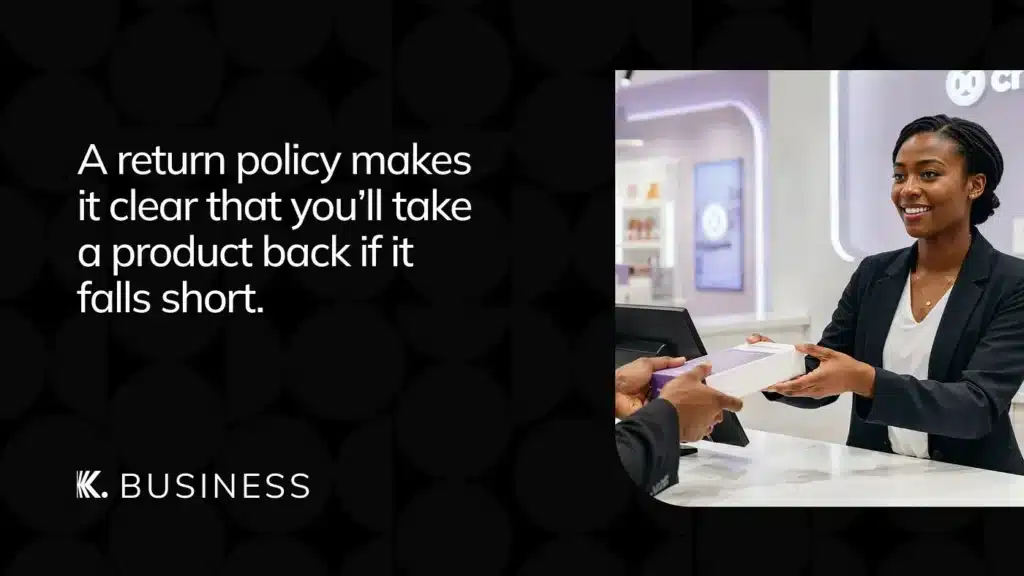
Your customer wants one thing when they buy from you: to know that what they’re paying for is worth it, and if it’s not, that they won’t be stuck with it. A return policy makes it clear that you’ll take a product back if it falls short, which can instantly boost a customer’s confidence in your business.
These are more reasons why having a return policy is good for your business:
1. It builds trust.
Your customers will feel safer buying from you when they know you’ll take back a product that doesn’t work for them.
2. It encourages new buyers.
First-time buyers often hesitate, and they’re more likely to take a chance on your business if there’s a return policy because it’s a safety net that gives them the assurance they need.
3. It improves customer loyalty.
When you handle returns fairly, your customers will remember the experience and they’ll keep coming back because they know you’ll treat them right.
4. It can get you free publicity.
A smooth return experience can turn a potentially negative situation into a positive story that your customers are happy to share with their friends.
5. It helps you improve.
Returns tell you what’s working with your products and what’s not so you can make improvements.
How to create a return policy that attracts customers
What your customers really want is clarity and fairness.
- Make sure the policy is short and clear. Include the time frame for returns and the condition the item(s) must be in (e.g. Unopened, unused, in its original packaging, etc.).
- Give your customers options. Refunds are great but exchanges or store credits keep the money in your business while still making your customer happy.
- Make the policy visible. Put it on your website and on receipts, or highlight it in social media posts.
- Add a human touch. A smile, a ‘thank you’, or a note that says, “We hope this works better for you” can make an ordinary return delightful.
Don’t think of returns as losses but as a way to build long-term relationships with your customers. It’s the kind of reassurance that makes a first-time buyer turn into a repeat customer and makes a repeat customer loyal.