Premium customers: earn 20% a year on a 3-month Locked Savings plan. Limited availability. Learn more.



Nigeria Tax Reform 2026: New Tax Laws, Tax-Free Threshold And What You Pay
Nigeria’s 2026 tax reform and new tax laws effective January explained. Learn the ₦800,000 tax-free threshold, new brackets, CGT exemptions, and how to calculate your take-home pay.

Introduction
The Federal Government of Nigeria has introduced a new set of tax laws that will take effect on January 1, 2026. This is the biggest change to the country’s tax system in many years, introducing new rules for individuals and businesses.
By the time you’re done reading this article, you’ll know what’s changing. We’ll walk you through what’s new in a way that actually makes sense – what it means for your personal and/or business finances, and the simple steps you can take to stay compliant.

What’s the 2026 Nigeria Tax Reform about?
In simple terms, the government is doing a massive cleaning of the tax system.
For too long, the tax system has been messy, with duplicated taxes and confusing regulations, making it hard for tax payers to understand what they need to do. This reform reorganises the entire tax system to make life easier for everyone.
The reform has clear goals:
- Make taxation simpler. You won’t need expert knowledge of tax law to understand your taxes.
- Make taxation fairer so that the right people pay the right amount.
- Widen the tax base so that more people pay taxes, reducing the burden on individuals.
- Go fully digital to make tax compliance less about paper and queues, and more about structure and convenience.
There are four new tax laws
The tax reform isn’t a single law. It’s a group of four new acts, each with a specific goal but working together:
- The Nigeria Tax Act (NTA): This explains what is taxed, who should pay, and how much they must pay.
- The Nigeria Tax Administration Act (NTAA): This focuses on the tax process – filing, paying, and managing your taxes online.
- The Nigeria Revenue Service Act (NRSA): This empowers the tax office (currently known as the FIRS) to do its job better and more fairly.
- The Joint Revenue Board Act (JRBA): This helps federal and state tax bodies work together, so you’re less likely to be taxed twice for the same thing.
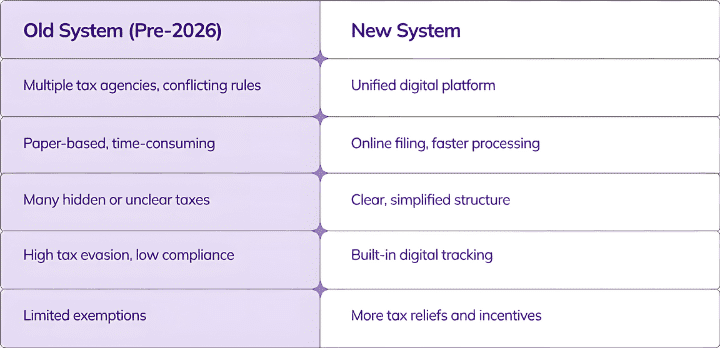
What does the reform mean for you?
The changes to the tax system have different impacts on salary earners and businesses.
If you’re a salary earner
The most significant changes here are to the Personal Income Tax (PIT) system.
- Clear exemption limit: If you earn ₦800,000 or less per year, you won’t pay income tax. That’s instant breathing room for low-income earners.
- Consolidated Relief Allowance (CRA): Targeted reliefs now replace CRA. Instead of a blanket allowance, you now get focused reliefs. For example, you can claim 20% relief on your rent (capped at ₦500,000).
- Exemptions and deductions: Pension, housing, and health insurance contributions are fully deductible. The more you secure your future, the less you pay now.
- Electronic Money Transfer Levy (EMTL): This levy is now transferred exclusively to states as part of stamp duties. Small transfers are exempted but large transfers may attract a small levy.
If you’re a business owner or a freelancer
If you run an SME, freelance, or manage a side hustle, the tax system now encourages you to grow without squeezing you dry.
- Corporate Income Tax (CIT): businesses with turnover below ₦50 million annually now pay zero corporate tax. That’s a big win for SMEs. You are taxed on the income you earn, not on the assets you own. For instance, if you have one million naira in your current account, there is no taxable income. But if that N1m is moved to a savings account and earns 10% interest, you’ll pay tax on the 10% interest earned, not the initial N1m.
- Value Added Tax (VAT): still at 7.5%, but invoicing goes digital, making calculations automatic. Essentials like food, education, and healthcare remain VAT-free.
- Tax incentives: sectors like tech, agriculture, and renewable energy get special breaks to encourage growth.
Important topics you should know about
The 2026 reform also introduces new rules for investments, company levies, and penalties:
1. Investing
- Capital gains tax (CGT): you can now sell your shares or properties without paying tax, if your sales are less than ₦150m, or your profit is less than ₦10m in a year.
- FGN bonds & insurance: interest and payments remain tax-free.
- Retirement savings: contributions, growth, and withdrawals – still tax-free.
- Stocks: owning them isn’t taxed, though selling for profit is.
- Rent relief: 20% off your rent tax (up to ₦500,000).
- Gifts & inheritance: still untaxed.
The message is clear: invest, grow, and formalise your hustle without fear.
2. Development levy
The new levy is set at 4%, and exempts businesses earning less than ₦100 million a year.
3. The penalty structure
Late tax filing now comes with penalties: ₦100,000 for the first month, ₦50,000 for every month after.
How to calculate your take-home salary?
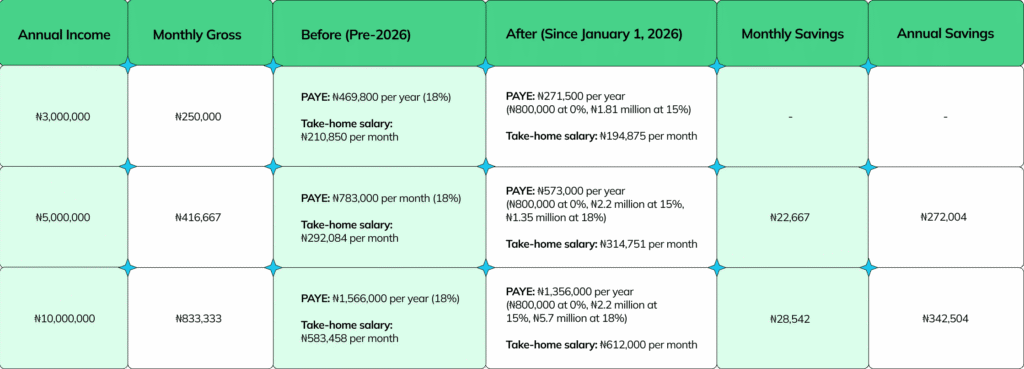
To show you how the 2026 tax reform affects your take-home salary (what’s left after tax and other deductions), we’ll compare what you earned before and after the new laws.
We’ve kept things simple by assuming total deductions of 13% – pension, which is 8% of your gross income (what you earn before tax and other deductions), and a contribution to the National Health Insurance Scheme, which is 5% of your basic salary.
Under the new laws, the first ₦800,000 of your income is now tax-free.
Your take-home salary: Before and after the new tax laws
A quick note on rent relief
These figures don’t include the new Rent Relief. Under the 2026 laws, you can claim a 20% relief on your rent (up to ₦500,000). This means you can further reduce your taxable income and keep even more of your hard-earned money each month.
How to get ready for the new tax reform law
The time to prepare is now. Don’t wait for the new year to scramble for compliance. Here’s a simple checklist to get you ready.
Personal Checklist
✅ Get or update your Tax Identification Number (TIN).
✅ Organise payslips, invoices, and bank statements.
✅ Update bank details and contact info with your employer.
✅ Track income and expenses digitally.
✅ Use reliefs: pension, housing, health insurance.
Business Checklist
✅ Keep CAC registration up to date.
✅ Set up digital invoicing for VAT compliance.
✅ Review your structure for tax efficiency (sole prop vs limited).
✅ Use compliant accounting software.
✅ Claim exemptions and allowances to reduce costs.
How Kuda makes this transition easy
Taxes can be overwhelming, but the right tools can make it seamless. The Kuda app is designed to help you manage your finances smarter and prepare for these changes with ease.
- Smart spending & categories: automatically sort your transactions so you can clearly see deductible business expenses versus personal spending. It’s like having a personal accountant in your pocket.Drag
- Separate business accounts: keep your hustle money separate from your personal funds, making tax filing far simpler.
- Scheduled payments: never miss a VAT or PAYE deadline – set reminders and automate payments to avoid penalties.
- Instant access to records: download account statements instantly for tax filing and audits.
FAQs
1. What is the tax-free threshold in Nigeria for 2026?
The new tax-free threshold is ₦800,000 annually. This provides instant breathing room for low-income earners, meaning if you earn this amount or less in a year, you won’t pay a single kobo in personal income tax.
2. How will small businesses benefit from these reforms?
Small companies with an annual turnover below ₦50 million now pay zero corporate income tax.
3. Do I need to reapply for a Tax Identification Number (TIN)?
Generally, you do not need to reapply for a new TIN if you already have one or have a National Identification Number (NIN). However, you should ensure your existing TIN is valid and linked to your bank accounts to stay compliant with the new digital tracking system.
4. Are investments like stocks, pensions, and bonds taxable under the new system?
It depends on the type of investment:
- Pensions, insurance, and FGN bonds: these remain fully tax-free to encourage you to secure your future.
- Stocks: simply owning stocks isn’t taxed, though selling them for a profit will attract a tax on your gains.
- Rent relief: you can claim a 20% relief on your rent, capped at ₦500,000, which reduces your taxable income.
Conclusion
Taxes are changing, but that doesn’t have to mean confusion or panic. For you, the impact is clear: if you’re an employee, your income tax brackets are easier to understand, with new reliefs and exemptions.
If you’re a business owner or freelancer, you’ll finally benefit from a fairer system that taxes you only on what you truly earn – not what sits in your account.
By staying informed and preparing early, you’ll avoid surprises and even save money. With tools from the Kuda business app, compliance becomes less of a burden and more of a lifestyle upgrade.