Premium customers: earn 20% a year on a 3-month Locked Savings plan. Limited availability. Learn more.


Smart Spending Habits: 5 Rules Every Nigerian Should Follow
Learn five practical smart spending habits to manage your finances better in Nigeria. Save more, avoid debt, and make your money work for you.

Introduction
A lot of money advice starts with “stop buying things you don’t need.” Let’s skip that.
You already know jollof at that overpriced restaurant isn’t the reason your account is crying by month-end.
The truth is, spending wisely in Nigeria takes more than discipline, it takes strategy, awareness, and a little bit of street sense.
This isn’t about being frugal to the point of suffering.
It’s about making your money stretch, even when everything around you; from fuel prices to data bundles, is trying to make it shrink.
In this post, we’ll break down 5 smart spending rules that actually work in Nigeria.
Whether you earn a lot or a little, you’ll learn how to budget smarter, cut waste, stay out of unnecessary debt, and build savings you can rely on.
Rule 1 – Give your money a plan
Think of a budget as a road map for your money. Without one, it’s easy to get lost. It’s about telling your money what to do, so you don’t end the month stressed about where it all went. A simple plan for your spending is the best way to stay in control and feel good about your finances.
Here’s an easy way to create one:
✅Know your income
Start by listing all the money you have coming in for the month. This includes your salary, side hustle money, freelance jobs, everything.
✅List your essentials
Next, write down your fixed monthly expenses. These are the non-negotiables like rent, electricity, food, toiletries, and transport.
✅Plan for your lifestyle
Decide how much you want to set aside for the non-essentials and fun stuff, like data, movies, or eating out. It’s important to budget for joy too.
✅Try zero-based budgeting
This means assigning a purpose to every naira before the month starts. Your income should be fully planned out: from bills to savings to spending, so that nothing is left unaccounted for. This way, you spend with intention and stay in control.
Rule 2 – Track your expenses and review monthly
Have you ever found yourself wondering where all your money went?
Tracking your spending is how you find the answer. Once a month, take a quick, judgment-free look at your expenses and sort them into two simple groups: ‘Essentials’ and ‘Extras’.
Once you know the difference, you’ll be able to cut down on waste. Use an app, a spreadsheet, or a small notebook, whatever works for you.
Rule 3 – Avoid debt traps and cancel unused subscriptions
Borrowing isn’t always a bad thing, but it should always be a planned decision, not a last-minute reaction.
Being intentional with your money helps you avoid the stress of last-minute borrowing.
You can do this by building an emergency fund for surprises and boosting your income with a side hustle.
Small changes, like cutting unused subscriptions can free up cash for these goals.
Rule 4 – Know the difference between needs and wants
You can’t spend wisely if you can’t tell the difference between a need and a want.
Rent, food, transport? Needs.
Shoes that match your new watch? Want.
Impulse spending usually happens when we confuse the two, or when we’re just trying to feel good quickly. It’s normal, but it’s costly.
Before you buy, ask: “Do I need this right now?” If the answer is no, save that money for something that actually matters.
Rule 5 – Save and grow your money
If you’ve ever said, “I want to be better with money,” here’s how you start:
- Save the lazy (smart) way: Use Kuda’s Spend+Save feature to save money without thinking about it. It’s like Ajo, but smarter.
- Learn the basics: Know the difference between saving and investing, between good debt and bad debt.
- Start investing early: You don’t need a huge amount to begin your investing journey. Start small, stay consistent, and let time do the heavy lifting.
Building wealth in Nigeria takes effort, but it starts with simple, smart habits
Common Mistakes Nigerians Make With Money
- Not budgeting for emergencies
- Life is full of surprises, and not always the good kind. An unexpected hospital bill or car repair can happen to anyone. An emergency fund is simply money you’ve set aside for these moments, giving you breathing room so you don’t have to borrow when things get tough.
- Buying on credit without a repayment plan
- The golden rule of using credit is to have a repayment plan before you spend. It’s a simple habit that keeps you in control and helps you avoid the cycle of borrowing to stay afloat. It’s better to live within your means, plan for big expenses, and use credit only when necessary.
- Spending to impress others
- Social media can make you feel like you need to keep up, but your financial journey is personal, so don’t compare it to someone else’s highlight reel.
- Focus on what truly adds value to your life, spend in line with your income, not your ego.
FAQs (Things You’ve Probably Asked Before)
1. What’s the best budgeting method for Nigerians?
Try the 50/30/20 rule:
50% for needs
30% for wants
20% for savings and debt
2. How can I save on a low income?
Start small. Even ₦200 daily makes a difference. Use Kuda’s Saving feature to build savings gradually. Small amounts add up faster than you think, and the key is consistency – not how much you earn.
3. Can I automate savings in Nigeria?
Absolutely. With Kuda, you can save daily, weekly, or monthly without lifting a finger.
You can automate daily, weekly, or monthly savings directly from your account through Kuda’s Spend+Save feature and Save Frequently Pocket.
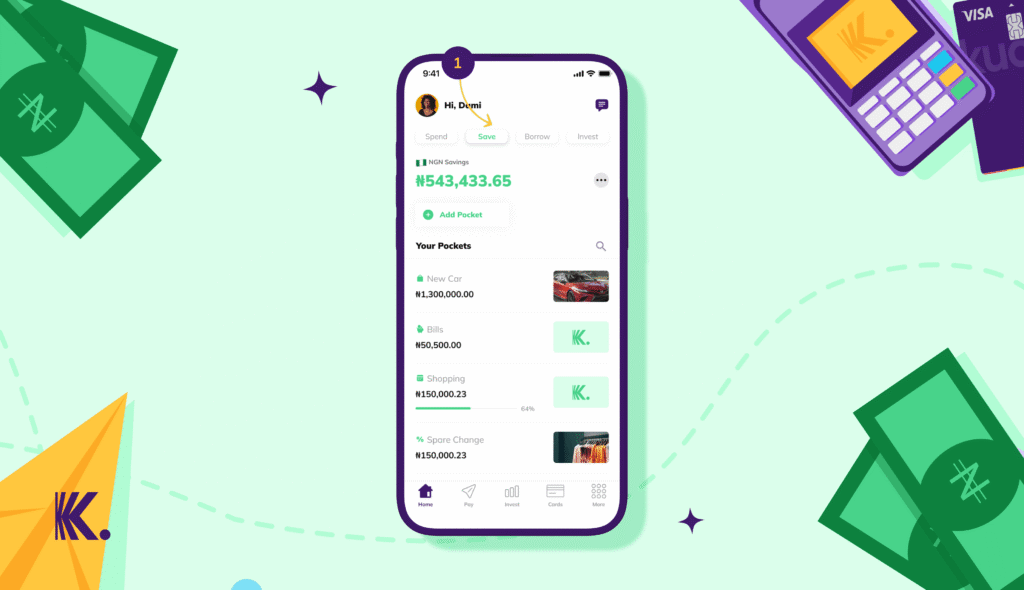
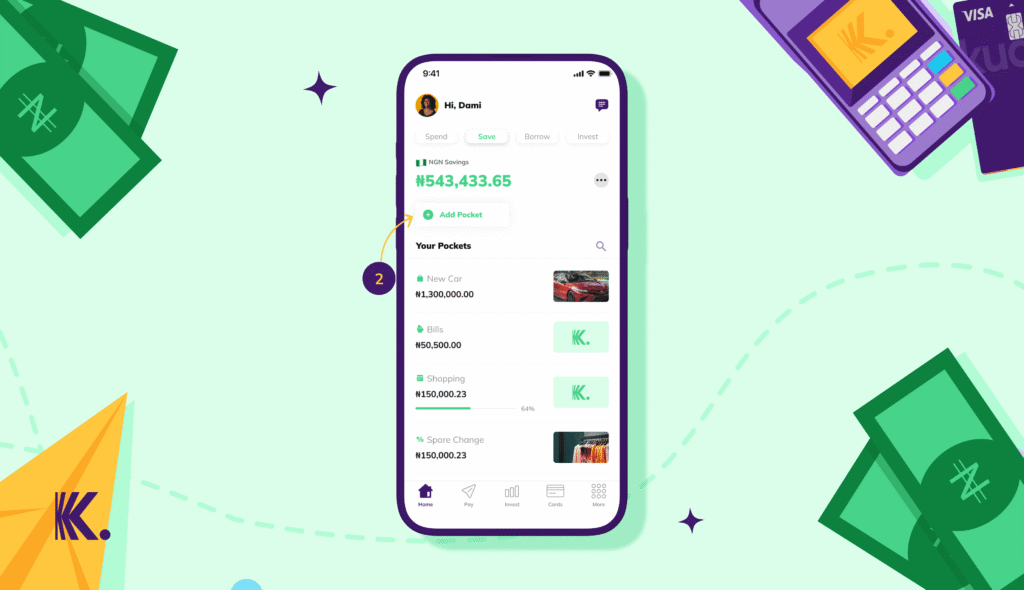
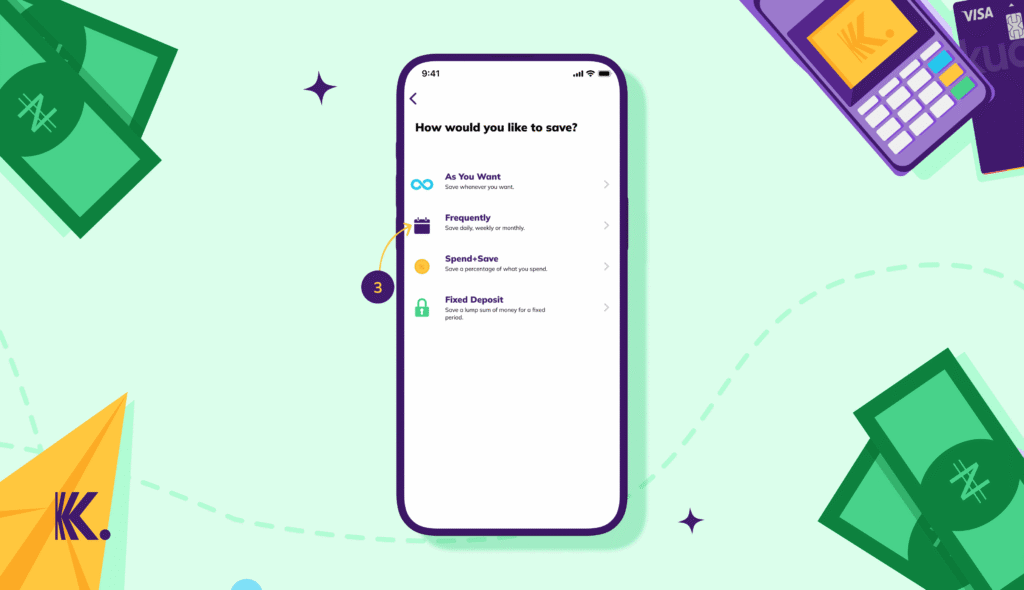
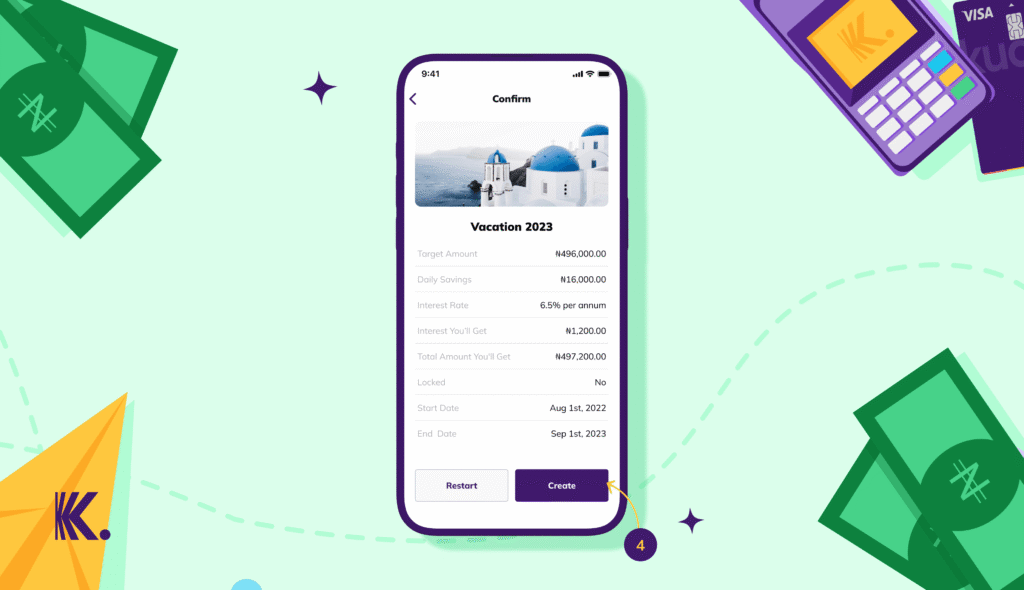
To create a Save Frequently Pocket:
1. Sign in to your Kuda app, then Save.
2. Tap Add Pocket.
3. Tap Frequently.
4. Add an optional photo and give your Pocket a name.
5. Type in the total amount you’d like to save, choose how often you’d like to save – daily, weekly or monthly, then set a start date and an end date.
6. Tap Create and your Kuda app will move money to your Pocket based on your settings
4. Why am I always broke before the month ends?
You’re not tracking your spending. Start now. You’ll be shocked by where your money is going. Use digital tools to set spending limits and always prioritise essentials over wants. This will help you manage money better and reduce wastage.
5. What about family pressure?
Set boundaries. Create a “support budget” (like 10% of your income) and stick to it. You can’t help others if you’re sinking.
6. How do I stop impulse buying?
Pause for 24 hours before buying anything non-essential. Delete shopping apps if you must. Your future self will thank you.